1Before you go
- Get the details. Ask the seller for the brand, model, year and frame size. With those, you can look up the maker's size chart and spec for that exact bike. Our sizing guide shows how: What size bike do I need?.
- Ask for a photo of the frame serial number. It's usually stamped under the bottom bracket, where the cranks join the frame.
- Run the serial through our free serial check. It takes a few seconds. It searches bikes reported stolen on CrankMart, so a clear result is a good sign, not a guarantee. If the serial matches a report, don't buy the bike and don't confront the seller: report the listing to us and give the serial to SAPS.
- Ask about the bike's story. How long have they had it? Where has it been ridden? When was it last serviced? Sellers who love their bikes usually enjoy telling you.
- Ask for the original receipt or proof of purchase, if they have it. It's a nice extra, and it shows where and when the bike was bought. If warranty matters to you, check the maker's warranty terms to see whether they cover a second owner. Buying from a private seller? Shop-style return and quality rights usually don't apply, so check the bike carefully before you pay.
2Frame: look it over in good light
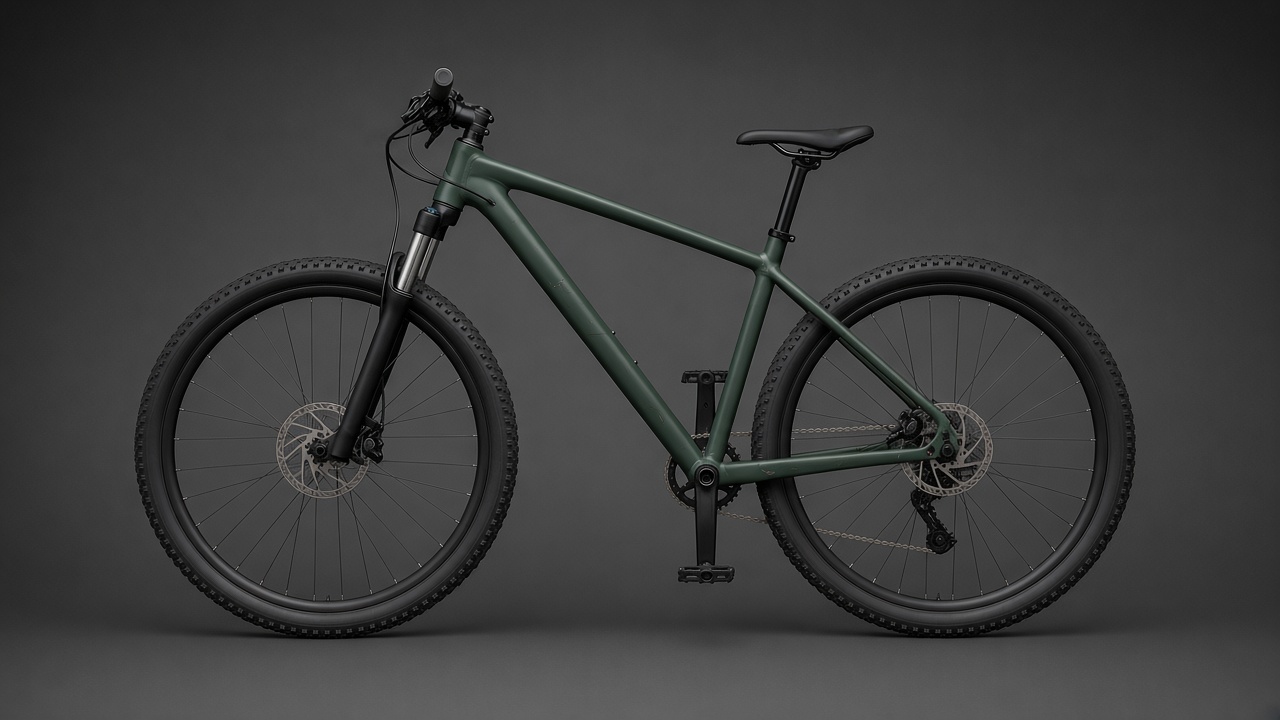
- Look along the head tube (at the front, where the fork goes in), around the bottom bracket (where the cranks are) and along the chainstays (the tubes running back to the rear wheel). You're looking for smooth, even paint and tubes.
- Check the underside of the down tube for stone chips or impact marks.
Look closely for cracks, dents or bulges too, especially where tubes join. Small paint scuffs are normal on a bike that's been ridden, but on a carbon frame a deep chip or impact mark can hide damage underneath, so have a bike shop check it before you pay. If you spot anything you're unsure about, ask the seller about it, or ask a bike shop to take a look.
3Suspension: give it a bounce
- Push down on the fork, and on the saddle if it has rear suspension. It should move smoothly and quietly.
- Hold the front brake and rock the bike back and forth to feel for any knocking at the front.
- Ask when the fork and shock were last serviced, and whether there are receipts.
4Wheels and tyres
- Lift each wheel and give it a spin. It should run straight between the brake pads or past the brake rotor.
- Squeeze pairs of spokes. They should all feel similarly firm.
- Look at the tyre tread and sidewalls. Tyres are easy to replace, so this mostly helps you understand how the bike's been used.
5Brakes
- Squeeze both levers. They should feel firm and stop the wheel well.
- On disc brakes, look at the rotors and ask when the pads were last changed.
6Gears and drivetrain
- Shift through all the gears, front and back, while turning the pedals. Shifts should be crisp.
- Ask when the chain, cassette and chainrings were last replaced. These are normal wear items.
7The little things that tell a story
- Dropper post (if fitted): does it go up and down smoothly?
- Grips, saddle and bar tape: worn touch points are easy to swap and show how much the bike's been ridden.
- Spare parts and extras: ask whether the original parts, manuals or pedals come with the bike.
8Take it for a ride
- A short test ride is one of the most useful checks, alongside the look-over above. Does it fit? Do the gears and brakes work well? Does it feel good?
- Bring your own helmet and, if you ride clipless, your pedals.
Pick a time and place that suits you both, ideally somewhere public and in daylight, like a coffee shop or a bike shop.
9Fancy a second opinion?
A local bike shop can give a used bike a once-over before you buy. Find one near you in our directory: crankmart.com/za/directory
Your checklist at a glance
- Brand, model, year and size from the seller
- Serial number photo, run through our serial check
- Receipt or proof of purchase, if available
- Frame looked over in good light
- Suspension bounced and service history asked
- Wheels spun, spokes squeezed, tyres looked at
- Brakes squeezed, pads and rotors looked at
- Gears shifted, chain and cassette age asked
- Test ride
- Optional: bike shop once-over
Paying
How paying works on CrankMart
FAQ
Where is the serial number on a bike?
Most often under the bottom bracket, where the cranks join the frame. Some bikes have it on the head tube or a chainstay.
What if the seller doesn't have a receipt?
Lots of riders don't keep them. It's a nice extra, not a must. Ask about the bike's history instead and run the serial check.
Should I get a bike shop to look at it?
If you'd like a second opinion, it's a great idea, especially for a full-suspension bike or an e-bike.
Does CrankMart charge a fee when I use Buy now?
There's no buyer fee: you pay the listed price, plus delivery if you choose it. CrankMart does not charge any commission on escrow payments. TradeSafe sets its own escrow fee, which it takes from the seller's payout.
Ready to start looking?
Browse used bikes on CrankMart, and keep this checklist on your phone.
Questions? support@crankmart.com